Therapy for Grief and Loss in NYC
Coping with grief requires a witness. Grieving alone is a difficult, prolonged, and painful process. Whether you are grieving the death of a partner, the end of a relationship, or the “invisible” grief of ending a career, I provide a safe, compassionate space in Manhattan to process and understand your loss while slowly restoring your feelings of joy and hope. I will not tell you to “move on,” “get over it,” or prescribe timelines for the grief to end. Often, it never truly ends, but rather changes and gets less acutely painful over time. I am here to help you carry your loss, not move it aside or abandon it. In our work together, there are no “shoulds.”
Full fathom five thy father lies;
Of his bones are coral made;
Those are pearls that were his eyes:
Nothing of him that doth fade,
But doth suffer a sea-change
Into something rich and strange.
- Shakespeare, The Tempest
When the relationship with the lost person had provided emotional support, meaning, validation, and a feeling of being understood, grief can be devastating to self-esteem. We form identities in relation to others, so a loss can disrupt our identity and balance. We may push away other people who try to help. We might avoid relationships and intimacy for fear of another loss. Healthy grieving does not necessarily mean "letting go," but gradually easing the pain and carrying the relationship internally in a way that provides continuity, memory, and emotional connection with the deceased.
Dr. Matthew Paldy, PhD, LP — Grief Counselor

As a licensed psychoanalyst practicing in Union Square, Manhattan, I help individuals work through the emotional catastrophe of grief. Drawing from extensive postdoctoral clinical training and my background in organizational behavior, I provide a grounding interpersonal space where I respect your personal values and hold your pain. Together, we will work to understand how your loss has affected you and your life.
The Value of Grief Support
Grief counseling provides the dedicated time, space, and guidance you need to process your pain. Through grief therapy, you can:
- Connect with expert care: Receive empathetic, evidence-based guidance from a trained specialist.
- Speak freely: Express your thoughts and feelings openly.
- Get validation and understanding: Feel truly seen, heard, and understood.
- Develop resilience: Gain self-compassion, confidence, and a sense of purpose in your newly altered life.
- Gain insight: Understand how the loss affects your mind and body.
- Develop coping skills: Learn healthy strategies to manage the pain and avoid the pitfalls of substance abuse as a coping mechanism.
- Restore balance: Create self-care routines so you have more capability to return to work and care for others.
Are You Experiencing Any of These Signs of Grief?
Grief can affect your mind, emotions, and daily routines in many ways. You may find yourself thinking:

- “Why does it come in overwhelming waves?” Feeling fine one minute, then finding that a small, sudden reminder brings the intense pain flooding back.
- “Why can't I stop replaying everything?” Obsessively replaying old conversations and things you wish you had said or done differently.
- “Why does life feel surreal?” Moving through days with a sense of unreality and disconnection, where your workplace and friends expect everything to go back to normal.
- “Will these crying spells ever stop?” Struggling with exhausting and unpredictable crying that leaves you feeling raw and dispirited.
- “Why do I feel like I'm just going through the motions?” Completing your work and personal responsibilities, but without any real sense of presence or meaning.
- “Why am I so completely exhausted?” Feeling grief-related fatigue that permeates your entire body.
- “Is it normal that I'm avoiding certain places?” Deliberately changing routines or avoiding music, locations, and people that trigger painful memories.
- “Who am I without them?” Facing a change to your identity and feeling like you have lost a large piece of yourself.
- “Why can't I focus or concentrate on anything?” Noticing that your mind feels cloudy and unfocused.
- “Why do I feel so isolated around people who care?” Feeling lonely and disconnected, even when you're around family and friends.
Types of Loss I Address in Grief Therapy
I specialize in helping clients with many forms of grief:
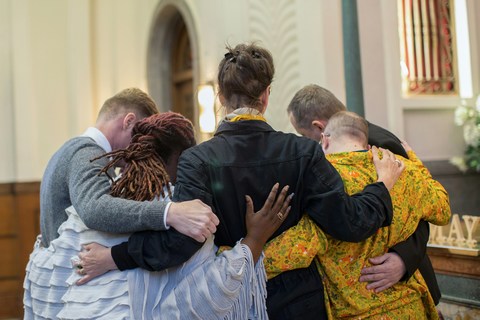
- Bereavement: The death of a partner, parent, sibling, or close friend.
- Hidden Loss: When a loved one is physically present but psychologically absent (dementia, addiction) or when a loss lacks closure.
- Complicated Grief: When mourning feels “stuck” or frozen, making it difficult to function long after the event.
- Professional Loss: The emotional impact of career endings, business failures, or the loss of a professional identity.
- Anticipatory Grief: Particularly when parents are aging and you can see their mortality and eventual death.
- Breakup Grief: The “living grief” associated with divorce or the end of a long-term partnership.
Is Your Body Grieving?
Grief often manifests physically as extreme fatigue before we can name it emotionally. It is common to feel:

- The “Grief Fog”: Difficulty concentrating, memory lapses, and a sense of unreality.
- Physical Exhaustion: Feeling heavy, burned out, or having a “tight” chest.
- Trouble Sleeping: Insomnia or the urge to sleep excessively to escape the pain.
- Anxiety & Hypervigilance: A sudden fear for the safety of others or yourself.
The Path Forward
In our work, we will we focus holding your grief for as long as it takes, and eventually on restorative techniques to expand your life so that the grief, while always a part of you, no longer consumes you. Together, we work toward restoring your capacity for joy and vitality. When loss is sudden or violent, it often carries traumatic dimensions that require their own careful attention. And when grief has strained a partnership, couples therapy can help partners grieve without losing each other in the process. Reading literature, such as C.S. Lewis's classic memoir A Grief Observed, can be helpful to give you insight and validation of how loss alters our very identity.
How to Find a Grief Therapist
Finding a grief therapist can feel like a difficult task, especially when you are already overwhelmed. Because the relationship you have with your therapist is critical to your healing, it is important to find the right fit. I offer a free 15-minute consultation and would be glad to discuss your specific needs in a grief therapist. Here are a few practical steps to guide your search for a grief counselor:
- Seek Specialized Recommendations: Look for professionals who explicitly specialize in grief and loss. If you feel comfortable, ask friends, family, or your primary doctor for recommendations, or use professional directories.
- Consider Cultural and Values Alignment: Relational comfort often deepens when working with a therapist who understands your background, identity, and core values. For instance, if you are experiencing a specific life transition or systemic cultural stressors, look for a practitioner with documented experience in those areas.
- Read Beyond the Bullet Points: When reviewing therapist profiles, read their full professional bios in addition to their list of services. Pay attention to how they describe their framework and see if their perspective resonates with your experience.
- Verify Clinical Approaches: If you are drawn to a specific therapeutic approach—such as deep, meaningful psychodynamic therapy, cognitive behavioral therapy, or mindfulness-based practices—ensure the therapist has training in that modality.
- Get Several Consultations: Most practitioners offer a free consultation. Use this time to ask specific questions about their clinical approach and experience with your particular type of loss. Finding a grief therapist is a collaborative process.
I specialize in understanding the complexities of grief and loss, and I draw from a range of approaches. I am always open to discussing your goals and helping you connect with the right therapist for your journey.
Frequently Asked Questions About Grief Therapy
What is the difference between normal grief and complicated grief?
Normal grief tends to arrive in waves that fluctuate in intensity, gradually becoming integrated into your life as you establish a new routine. Complicated grief (or Prolonged Grief Disorder) feels intensely 'frozen' or static over many months, keeping you in a continuous state of mourning that impairs your daily work, relationships, and well-being.
How long does grief therapy typically last?
Because every relationship and loss is unique, there is no predetermined timeline for healing. Some clients find that several months of regular grief counseling give them the stabilization they need to cope, while others choose deeper, analytical therapy over a year or more to explore the long-term changes of the loss.
Can therapy help with a loss that is not related to a death?
Absolutely. Grief applies to any profound loss of an emotional attachment. Clients frequently enter my Manhattan practice to process 'hidden' or unacknowledged losses, including the breakup of a marriage, a sudden professional setback, or the ambiguous loss experienced when a relative suffers from dementia or addiction.
Core Grief Experiences
Time, Process & Emotional Trajectory
The Effects of Grief
Unresolved or Anticipatory Grief
Grief Literature & Reflective Insights
Literature offers a profound window into the raw, internal texture of mourning that clinical models cannot always touch. Writers who have cataloged their own periods of mourning provide reassurance and words for experiences—such as disorientation, numbness, and anger—that can otherwise feel deeply isolating or frighteningly chaotic.